The first practical question most couples ask us is not about contracts or clinics. It is “how do we actually get there?” There have been no passenger flights into Ukraine since February 2022, and in November 2026 the country’s airspace is still closed. So every family arrives by land, and almost every one of them ends the journey the same way: stepping off a train at Kyiv’s central station with a suitcase, a phone full of booking confirmations and, a few weeks later, a car seat for the way back. This is how that trip works today, written from what we see parents go through, with sources for everything that can change.
First, the advisories and your insurance
Be clear-eyed about where governments stand. The UK Foreign Office advises against all travel to most of Ukraine, Kyiv included, and against all but essential travel to several western regions. The US State Department keeps Ukraine at Level 4, “Do Not Travel”, most recently reissued on 28 August 2026. Other countries say much the same. We are not going to tell you to ignore that. Coming for the birth is your decision, and it should be an informed one.
The advisories matter for a very practical reason: insurance. The FCDO page on Ukraine warns that travel insurance can be invalidated if you travel against its advice, and many standard policies exclude war zones altogether. Read the exclusions before you pay. If a policy is meant to cover medical care in Ukraine or an emergency evacuation, get that confirmed in writing, for the exact dates and for Ukraine by name. Specialist policies for high-risk destinations exist, and some parents buy one for the Ukrainian leg and keep their usual cover for Poland or Moldova. Also bring some cash: the FCDO notes that ATMs and card terminals may stop working during power cuts.
Getting to Kyiv: fly to Poland or Moldova, then take the train
Most of our families fly into Poland and continue on Ukrainian Railways (Ukrzaliznytsia). The two main gateways are Przemyśl Główny, close to Rzeszów in the south-east, and Chełm, east of Lublin. According to the Ukrzaliznytsia timetable for late November 2026, Przemyśl has several direct trains to Kyiv every day: a daytime Intercity+ and a number of overnight services, among them the new “Yaroslav Mudryi”. Chełm has daily overnight trains to Kyiv, including the flagship named after Mykhailo Hrushevskyi, and a Warsaw to Kyiv train also runs through Chełm. From 28 November a further Kyiv to Chełm train via Zhytomyr and Lutsk starts running every other day. If you are coming from the south, there is a daily train between Chișinău and Kyiv.
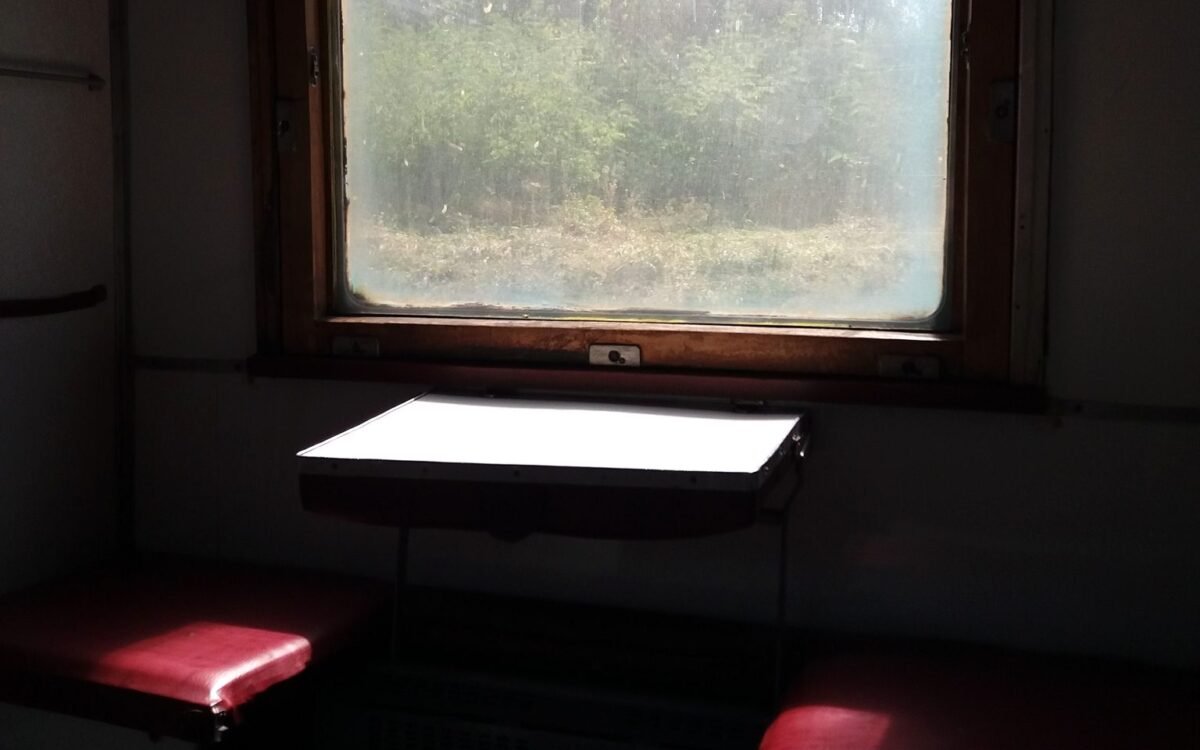
The overnight trains are what most parents take. You sleep in a compartment and wake up somewhere around Kyiv in the morning, which is far less tiring than a day on the road. Book through the official Ukrzaliznytsia website or app as soon as your dates are firm, because the international trains are popular and fill up. And keep your plans a little loose. Russian strikes have hit rail and energy infrastructure, trains run late, and timetables change at short notice. We would rather you arrive a day early than rush the last stretch.
Some people prefer the road, by bus or by car. The main road crossings from Poland are Shehyni (Medyka on the Polish side), Krakovets (Korczowa), Rava-Ruska (Hrebenne), Ustyluh (Zosin) and Yahodyn (Dorohusk), plus several smaller ones. They do not all work the same way. In the second half of November, Ukraine’s border guards reported that Yahodyn was temporarily not processing passenger cars, and that Shehyni was the only checkpoint on the Polish border taking pedestrians. Queues change through the day, so check the State Customs Service’s live waiting-time page before you set off. Ukraine’s borders with Belarus and Russia are closed.
At the Ukrainian border
Entry rules depend on your passport, so check them with the Ukrainian embassy in your country. British citizens, for example, can stay up to 90 days in any 180 without a visa, and Ukraine has confirmed this until 30 January 2027. Many other nationalities have similar visa-free arrangements; some need a visa. The FCDO says border guards may ask you to fill in an immigration card, give fingerprints and show that you have enough money for the trip, which can mean bank cards, an accommodation booking or a return ticket. Have your hotel booking and your onward plans on paper as well as on your phone.
Count your days carefully. Between the birth, the registration, the apostille and the wait for the baby’s passport, parents often stay several weeks, and if you came earlier in the pregnancy those days count too. Overstaying the 90 days brings a fine and can keep you out of Ukraine for a while.
Kyiv in practice: air alerts, shelters and the curfew
The thing that surprises newcomers is how normal much of Kyiv looks. Cafés are open, the metro runs, people go to work. The war shows up in the routine. Air-raid alerts sound regularly, often at night. Install an alert app before you arrive (the FCDO mentions “Air Alert”, one of the most widely used) and the city’s own Kyiv Digital app, which also shows the threat levels the city now uses. When you check in, ask where the hotel’s shelter is and how you get there from your room. Many metro stations serve as shelters too. If an alert sounds, go. Do not wait to see what happens.
Since 10 September 2026 the curfew in Kyiv has run from 01:00 to 05:00, under an order of the Kyiv City Military Administration. During those hours you may not be on the street or drive without a special pass. A taxi does not change that. The one exception is going to the nearest shelter during an alert. Because trains are sometimes delayed into the curfew, the city has organised bus routes from the Central Railway Station for arriving passengers. Hours have changed before, so check the city’s official page close to your trip.
Power cuts
Attacks on the energy system mean scheduled power cuts in Kyiv, and after a heavy strike, emergency ones with little warning. The schedules are published by DTEK and you can look up your address on the YASNO app or in Kyiv Digital. Before you book a hotel or apartment, ask what happens when the power goes: is there a generator, and does it run the lift, the heating and the Wi-Fi, or only the emergency lights? Answers vary a lot. Keep a charged power bank, a torch, some water and warm clothes in the room. In winter the cold matters more than the dark.
Hospitals are a priority for backup power. In February 2026 Ukraine’s Ministry of Health reported that every hospital in its core network had backup power sources, more than 3,500 generators in all. If you want to know how the maternity hospital where your surrogate will deliver handles outages and alerts, ask us and we will tell you what it has in place.
Going home with your baby
The trip back is where the paperwork matters most. A Ukrainian birth certificate names you as the parents, but it is not a travel document, and a baby born to foreign parents does not normally become a Ukrainian citizen just by being born here: citizenship follows the parents. Your baby needs a passport or emergency travel document from your own country, issued through your embassy or consulate, and the timing of that document usually sets your departure date. We have written about the steps that come first: registering the birth and getting the apostille, then the consular side for American parents and British parents. Our page on citizenship and travel documents covers other nationalities.
When you cross the border, carry the baby’s passport, the Ukrainian birth certificate with its apostille and translation, and the hospital discharge papers. Check the entry rules of the country you are crossing into as well, especially if your baby’s document is temporary. Many parents book a whole train compartment for the trip out. With a newborn, a closed door and a place to lie down make the long ride much easier than a bus. Ask the paediatrician when the baby is fit for a long journey and what to bring. One more point for couples where the father also holds Ukrainian citizenship: under martial law, Ukrainian men aged 23 to 60 are generally not allowed to leave the country, and that applies to dual nationals too. Raise this with us before the programme starts, not at the border.
What we do before you travel
We go through the route, the dates and the documents with each family before they book anything, and we stay in touch while you are in Kyiv. If you would like to talk through your own trip, write to desk@ukrainiansurrogates.com or call +380800301323. We are also on WhatsApp, Viber and Telegram at +380959017224.
This article is general information based on the UK FCDO travel advice for Ukraine, the US State Department advisory, Ukrzaliznytsia timetables, Kyiv City State Administration announcements, State Border Guard Service and State Customs Service data and a Ministry of Health statement, as checked on 26 November 2026. It is not legal, medical or travel-safety advice. Security conditions, curfew hours, timetables and border rules can change quickly; check official sources and your own government’s advice before you travel.
